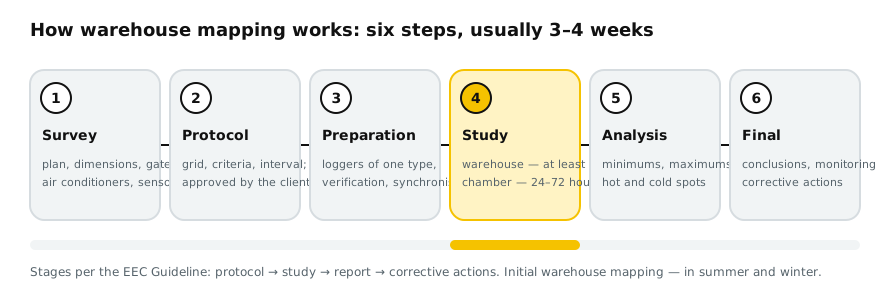
Steps
- Survey and input data
We request the floor plan, storage area dimensions, racking layout, the location of gates, windows, air conditioners, ducts, heaters and existing sensors. We clarify the storage range and the warehouse schedule.
- Mapping protocol
We describe the site, objectives, acceptance criteria, logger type and verification details, the layout and table of numbered points, recording interval, duration and test conditions. The protocol is approved by the client's manager.
- Logger preparation
Loggers of one type with valid verification, the same recording interval (usually 5–10 minutes) and a synchronised start. Before placement we check that every device is recording.
- Placement and study
Loggers are fixed according to the layout so that forklifts cannot move them and the sensor does not touch metal or concrete. The warehouse works as usual: we need the real picture with gate openings, nights and weekends. A warehouse study lasts at least 7 consecutive days.
- Data collection and analysis
We collect the devices and match serial numbers to locations. For each point — minimum, maximum and mean; we find the cold, hot and critical points and compare them with the criteria and warehouse events.
- Report and recommendations
Tables, charts for each logger, heat maps, a conclusion on the suitability of the area, places excluded from storage, points for permanent monitoring and, if needed, a corrective action plan.
What we will need from you
Input data and arrangements inside the warehouse save the most time. Go through the checklist — at the end you will see what to do before we arrive. Your answers are not sent anywhere until you click “Agree on mapping dates”.
During the study
- Loggers are not touched or moved — a moved device spoils the data for its point.
- The contact person records unusual events: repairs, breakdowns, power cuts, long gate openings. Without these notes an excursion in the data cannot be explained.
- Climate equipment runs normally: if an air conditioner is switched off “just in case”, the results will not reflect operation.
- If something happens, call us: we will decide whether to continue or extend the study.
What you receive
| Document | Contents |
|---|---|
| Protocol | site, objectives, acceptance criteria, layout and placement table, recording interval, duration, tests |
| Report | logger and verification details, values for each point, charts, cold and hot spots, outdoor temperature, conclusions |
| Recommendations | places where storage is not allowed, points for monitoring sensors, proposals on climate equipment |
| Raw data | logger files in electronic form — they can be shown to an inspector or auditor |
More on the report contents and requirements — on the warehouse mapping page; how many loggers you need — in the point calculator.
Frequently asked questions
How long does warehouse mapping take?
The study itself takes at least 7 days. With the protocol, placement, collection and report it usually takes 3–4 weeks.
Does the warehouse have to stop during mapping?
No. On the contrary, it must work as usual: the EEC Guideline allows mapping of loaded areas, and the data must reflect operation.
Who approves the protocol?
The client's manager. A study does not start without an approved protocol.
Can we do the mapping ourselves?
Yes, if you have verified loggers of one type and a method. Loggers can be rented; we can help prepare the protocol and report.